Which Nana Character Are You?

Find out which Nana character captures your heart.

Nana is one of the most emotionally honest stories ever told in manga or anime. It refuses to romanticize or simplify heartbreak. Every character in Nana is trying to love well and mostly failing in ways that are heartbreakingly familiar. They want the right things and make the wrong choices. They protect themselves in ways that hurt the people they love.

This Nana character quiz is designed to find which character's emotional architecture most closely mirrors yours. Not who you want to be, not who you relate to aesthetically, but who you actually are when you're tired and scared and in love and trying to hold it all together.

Nana Osaki is independence as survival strategy. She built her strength out of the decision to need no one, and she's been paying the cost of that decision ever since without letting anyone know. Hachi is love as a search for safety. She chases warmth because somewhere in her history, warmth was the thing that kept being taken away.

Ren is the beautiful, destructive collision of love and self-destruction. Yasu is the quiet center that everyone leans on, the stability that makes everyone else's chaos possible while running on grief of his own. Nobu loves with his whole self, without reservation, without the protective mechanisms most people build first. Shin carries darkness like a second skin; it arrived early and shaped him.

The reason this series gets under people's skin so completely is that there's no villain in Nana. There are just people who love in ways that don't align, who want incompatible things, who make choices that hurt other people out of need rather than malice. That is, if we're being honest, most of human relationship experience.

Which character's wounds do you carry? Which one's way of protecting themselves maps onto yours? Which one's particular brand of longing feels most like the thing you've been reaching for your whole life?

That is what this Nana character quiz is looking for. Not your favorite character. Not your most aesthetic match. The one who is, inconveniently and uncomfortably, most like you. Take it. Prepare to feel things.

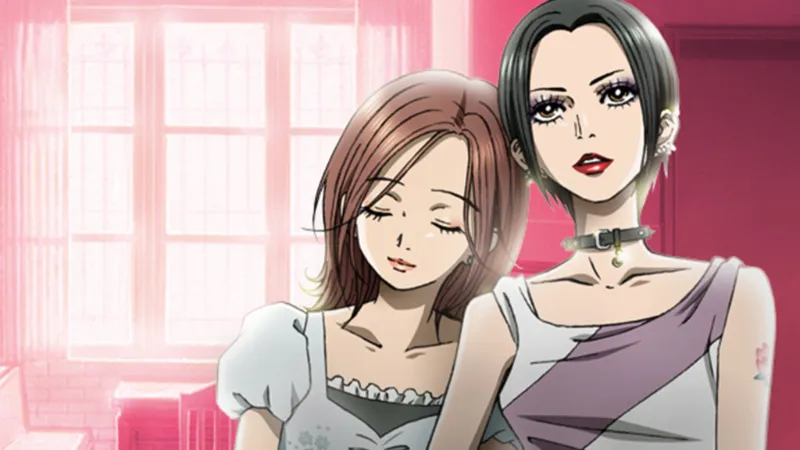
Nana Osaki and Hachi sit together with a pink bedroom in the background

Image sourced from Nana (© Ai Yazawa / Madhouse). Used under fair use.

Why Nana Still Breaks People 20 Years Later

Nana was serialized between 2000 and 2009 and remains on hiatus, but its emotional impact has only grown with time. Psychology researchers who study narrative identity point to stories like Nana as unusually effective "mirror texts", or stories that reflect readers' own relational patterns back to them with such specificity that they feel personal rather than fictional.

The show's core tension between independence and attachment, between becoming yourself and belonging to someone, resonates across generations because it maps onto a universal developmental struggle. People cry at Nana because it's honest about the specific ways humans fail each other while trying to love each other. That kind of honesty is rare, and when you encounter it, it hits hard.

Frequently Asked Questions

Nana explores the tension between independence and attachment, and the specific ways people fail each other while genuinely trying to love. Its central argument is that love and incompatibility can coexist, and that relationship pain often comes not from malice but from people protecting themselves in ways that hurt the people closest to them.

Nana Osaki built her identity around not needing anyone, using independence as both a strength and a defense against further loss. Nana Komatsu leads with warmth and attachment, seeking safety through connection. Both approaches carry real costs: Osaki's self-sufficiency isolates her from the closeness she needs, while Komatsu's attachment leads her toward people who offer comfort without stability.

Nana resonates because it portrays the way people actually fail each other: not through cruelty, but through incompatible needs, fear, and self-protection. There are no villains in Nana. Every character is doing something understandable that still causes damage. That kind of honesty is rare in fiction, and when readers recognize their own relational patterns in the characters, it tends to hit hard.

More Nana Character Analysis & Related Quizzes

If you identify with your result and want to know what it says about you, read my deep dive on Why Nana's Characters Emotionally Resonate With Us. Or, instead of asking which Nana character is most like you, find out which would be your soulmate in my Nana Character Soulmate Quiz. And for a more hopeful foray into love and romance, check out my Bridgerton Character Quiz.

All Quiz Questions

You wake up to find your roommate adopted a cat without asking. What’s your reaction?

I act mad but secretly fall in love with the cat almost immediately.

I roll with it. The cat can stay as long as it doesn’t destroy my stuff.

I immediately start making a cute cat bed and buying tiny outfits.

I threaten to move out, but I probably end up being the cat’s favorite person anyway.

I act like I don't care, which is easy, because I don't.

How do you handle heartbreak?

Shut everyone out and pretend I’m fine until I actually am.

Cry, overanalyze everything, and get my feelings out until I feel normal again.

Write about it, sing about it, or make it art. Channel it into something greater.

Move on and focus on anything else, like friendship, fitness, or my goals, to stop myself from thinking about it.

Rationalize it to death until I convince myself it’s for the best.

You’re at karaoke and someone just volunteered you to sing next. What do you do?

Grab the mic without hesitation. This is my main character moment.

Object and say no until someone else agrees to go up with me.

Flat out refuse. Absolutely not.

Hesitate, then pour my heart and soul into the performance.

Pick the most ridiculous song I can find. I want people laughing WITH me, not at me.

Your friend repeatedly asks you for advice and then ignores it. How do you handle it?

I get a little annoyed, but I keep trying to help them anyway.

I pull back until they're really ready to listen.

I get even more involved and try to help them (or make them) take my advice.

I laugh it off but secretly feel upset about it.

I stop offering help completely. Let them learn the hard way.

Your best friend starts a new hobby and absolutely will not stop talking about it. What do you do?

Try to care but zone out whenever they talk to me about it.

Get genuinely invested and ask questions. I love seeing them so excited!

Tease them affectionately about their new obsession.

Try the hobby too so I can join in too!

Feel a little envious about their passion and wish I felt it too.

What kind of people are you most drawn to?

Passionate, wounded souls who make me feel alive.

Reliable, gentle, and steady people who make me feel safe.

Emotionally complex, intriguing, and charismatic individuals.

Honest, grounded people who tell me the truth even when it hurts.

Curious, spontaneous, and exciting people.

What scares you most about growing up?

Losing my spark and becoming ordinary.

Ending up alone, no matter how much I chase love.

Becoming responsible for everyone else’s happiness while neglecting my own.

Waking up one day and realizing I chased the wrong things.

Never feeling fully understood, no matter how close people get.

Which quote feels most like something you’d say?

“If I can’t have forever, I’ll take the moment and make it last.”

“I just want everyone I love to be okay.”

“Control is the only way I know how to feel safe.”

“I don’t need saving. I just need someone who won’t run.”

“Love means showing up, even when it’s inconvenient.”

How do you want people to remember you?

As someone who loved fully, even when it hurt.

As someone who made art that mattered.

As someone who stayed true to themselves no matter what.

As someone who brought stability and loyalty into their lives.

As someone who never stopped chasing what they believed in.

What do you love most about this show?

The raw, messy emotion. It doesn’t sugarcoat anything, and it feels real.

The friendships. How complex and painful they are, and how they mirror real-world relationships.

The aesthetic. The punk looks, the cigarette smoke, the band drama. It's iconic.

The way it explores ambition, independence, coming of age, and chasing something more.

How the emotional weight of it wrecks you in the best way.

All Quiz Results

Nana Osaki

You feel everything at full volume, even when you're performing indifference for an audience that includes yourself. You've built your independence as a kind of fortress. You convinced yourself early that needing people made you weak, and you've been defending that position ever since, even as it costs you things worth having.

People are drawn to your strength before they notice your loneliness, and that's the dynamic you've both cultivated and resented. You want to be understood without having to explain yourself. You want someone to see through the armor without making you take it off.

What you haven't fully accepted yet is that you're allowed to want that. Wanting connection isn't a betrayal of who you are. It's just an extension of it. You've been through enough to earn your hardness. But the moments of real softness, the rare ones where you let someone in, are the ones that actually matter. Make room for more of them.

Nana Komatsu (Hachi)

You love recklessly and with your whole heart, and you've been hurt enough times for that to feel like a design flaw. The part of you that leads with warmth, that builds nests in every new place you land, that believes in people even after they've let you down...that part is the bravest thing about you.

Your pattern is chasing safety through connection, and the trouble is that safety and connection don't always come packaged together. You've attached to people who offered warmth without stability, or stability without warmth, and you've been trying to reconcile the difference ever since.

People underestimate you because you're soft. They're wrong. There's a quiet resilience in you that outlasts the romance and the heartbreak both. You get back up every time because you're determined to be okay. That stubbornness, dressed in softness, is your actual superpower.

Ren Honjo

You live like you're on borrowed time: high highs, catastrophic lows, and a relentless hunger for intensity that most people find either magnetic or exhausting, depending on where they're standing. You'd genuinely rather burn out than fade away. The idea of a small, safe, ordinary life is more frightening to you than any of the damage your choices have caused.

What lives underneath the intensity is a wound you've never fully looked at. The art and the love and the chaos are all, in their way, attempts to fill it. Or at least to feel something so loudly that you can't hear it.

You're not self-destructive because you don't care. You're self-destructive because you care so much and don't know what to do with it. The people who love you need you to stay. Not for their sake. For yours. The story isn't over. You haven't found out yet what happens when someone who loves you as fiercely as you love them also refuses to let you disappear.

Nobuo Terashima (Nobu)

You love with your whole self, without strategy, without reservation, without the protective mechanisms most people build before they let someone in. That's a deliberate refusal to let the possibility of pain be a reason not to love fully.

You are genuine in a way that's almost old-fashioned. What you say is what you mean. What you feel shows on your face. You don't play games, and you have limited patience for people who do, because you can't see the point when the real thing is available.

The vulnerability that makes you so lovable is the same thing that makes heartbreak devastating for you. You don't have the armor that other people rely on. When you get hurt, you feel all of it.

It's worth it. Don't let anyone tell you otherwise. The people who love the way you do are rare. You are not too much. You are exactly right for someone who deserves you.

Shinichi Okazaki (Shin)

You carry darkness like a second skin. It arrived early and you've been learning how to live with it ever since. The beauty people see in you is real. So is the fracture beneath it. Both are yours.

There's a tenderness inside you that surfaces at unexpected moments, usually with the people you've decided are safe. It's more fragile than your surface suggests, and you protect it accordingly. Letting people see that softness feels dangerous in a way you can't always explain.

You are drawn to intensity because ordinary feels hollow when you're wired the way you are. The highs are high. The lows are low. The middle ground that other people seem to find comfortable feels distant and a little unreal from where you're standing.

What you're learning, slowly and sometimes reluctantly, is that someone can love the whole thing: the darkness, the tenderness, the chaos and the quiet. Not despite those things. Because of them. You don't have to disappear to be worth keeping. Stay long enough to find out.

Yasushi Takagi (Yasu)

Everyone leans on you. That didn't happen by accident: you've spent years making yourself the kind of person who can be counted on. You've done it so thoroughly that people sometimes forget you're also carrying something.

Your strength is quiet and total. You don't perform it. You don't require acknowledgment for it. You show up, hold things together, and make the difficult look manageable, and you do it from a place of love so deep and so steady that most people never have to think about where it comes from.

What most people don't see is the grief you carry without letting it stop you. Loss has shaped you more than you let on. The steadiness isn't absence of feeling: it's feeling everything and choosing not to let it fracture what you've built. You deserve someone who notices the weight without being told. You deserve to be the one someone worries about for once. The people who love you are trying to get close enough to show you that. Stop making it so easy for them to assume you're fine.

Reira Serizawa (Layla)

You were built to be adored, and you've spent years not knowing if anyone has actually seen you. The stage version of you is extraordinary: polished, luminous, designed to be loved at a distance. Up close, there's someone much more fragile who wants to be known without the performance, without the mythology, without the distance that fame requires.

You carry contradictions most people never have to reconcile. You're genuinely strong and genuinely breakable at the same time. The confidence is real. So is the fear underneath it. Living inside that contradiction teaches you to perform the parts that are expected, and to keep the real parts somewhere private and protected.

What you want is simple in theory and almost impossible in practice: to be chosen for the version of yourself that no one buys a ticket to see. The quiet version. The uncertain one. The one that exists only when the lights go out and there's no role to play.

You haven't stopped wanting that. You've just been careful about who you ask for it. That carefulness has cost you things. It's also kept you intact.

Takumi Ichinose

You learned early that control was the only reliable form of safety. When you can manage outcomes, predict behavior, stay three steps ahead, the fear of loss becomes manageable. The cost is that everything you hold gets held at a certain distance, including the people you actually need.

You're not cold. That's what people get wrong about you. The precision, the composure, the refusal to show weakness: those aren't indifference. They're the architecture of someone who has experienced enough loss to become afraid of it. You built the walls with full knowledge of what you were doing.

The person underneath the armor craves loyalty and genuine respect with a depth that would surprise the people who only see the surface. You've wanted to be known. You just can't survive the risk of what happens if someone gets that close and leaves.

That fear is running more of your life than you've admitted. The control gives you power, and it costs you the exact thing it was supposed to protect: the people who could actually stay if you let them close enough to choose to.

Junko Saotome

You see things clearly, and that clarity is a gift you've had to learn to use carefully. The fog everyone else seems to be walking through never quite settles around you the same way. You see the patterns, the self-deceptions, the convenient stories people tell themselves, and you've learned to choose when to say something and when to wait.

You're not unfeeling. The clarity coexists with genuine tenderness for the people you love, including their messes. You just don't romanticize the mess. You show up for people in the middle of their worst decisions without pretending those decisions are good ones, and that combination is rarer than most people realize.

What people underestimate about you is how much your groundedness is a form of strength. Staying sane in situations designed to produce chaos takes more work than anyone gives you credit for. You make it look easy because you've done the internal work. It wasn't always this natural.

You're the person who tells the truth with enough warmth that people can actually receive it. In a story full of beautiful disasters, you're proof that clarity and love are not opposites.

Kyosuke Takakura

You are genuinely rare: a person who shows up, keeps their word, and stays without needing a crisis to prove their commitment. In a landscape full of dramatic love and spectacular suffering, you're the one who chose something quieter and more durable. Most people don't recognize that as a choice. It is.

You prefer truth over pretense and consistency over fireworks, not because you're incapable of passion, but because you've thought about what actually lasts. Fireworks are easy. Showing up on a Tuesday when nothing dramatic is happening, with the same warmth and reliability you brought at the beginning: that takes character.

Beneath the composure is a tenderness that only surfaces when it's safe. The people who've earned that part of you know what they have. You don't distribute it widely. You give it with full intention to the specific people who've proven they'll handle it carefully.

The role you play in other people's lives is often invisible to them until you're gone. You're the steady thing everyone organizes around without realizing it. That value isn't always acknowledged out loud. You've made peace with providing something the world doesn't have a good vocabulary for yet.

About the Author

Maya is the creator of Brainrot Quizzes and the person behind every quiz on this site. She started writing quizzes because the ones she loved growing up had a strange kind of magic. They were fun, but they also felt personal, like the questions actually understood something about you.

Over the past five years, she has been trying to recreate that feeling by writing quizzes that are thoughtful, emotionally aware, and honest. Her quizzes often explore archetypes, relationships, personality patterns, and the characters people connect with most deeply.

Each quiz begins as a framework of archetypes, emotional patterns, or character traits. Maya develops questions designed to reveal those patterns through everyday decisions rather than obvious personality labels.

Maya believes a good quiz should make you feel seen, not just entertained. The goal is always the same: ask better questions, give more meaningful results, and create something that feels a little more human than the average internet quiz.

When she's not writing quizzes, she's usually reading, rewatching something she's already seen, or explaining to strangers why Nana deserved a second season. To learn more about how each quiz on this site is made, explore the Brainrot Quizzes editorial guidelines.